
The India-Japan joint naval exercises are a strategic signal for China, observes Dr Rajaram Panda.

Just like China wants Trump to lose the US presidential poll, it may want Modi to lose the Lok Sabha polls. So months before the 2024 elections, China may take possession of an important area, say one of the Char Dhams, warns Sanjeev Nayyar.

The United States-China Summit meeting concluded at a sprawling mansion in Woodside, California with Presidents Joe Biden and Xi Jinping agreeing to work towards ensuring that the differences between the two countries remain manageable and the relations do not derail.

China welcomes all initiatives that truly help developing countries build infrastructure and sincere efforts to promote connectivity and common development, the Chinese Foreign Ministry said.
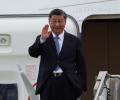
As United States President Joe Biden prepares for a rare summit with Chinese President Xi Jinping, the ongoing wars in Ukraine and between Israel and Hamas set the stage for high-stakes discussions, CNN reported on Tuesday.
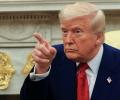
Trump's sweeping tariffs and penalties on China-built ships have turned global shipping into the front line of economic war, observes Shyam G Menon.

US envoy Eric Garcetti on Thursday said he respects that India likes its "strategic autonomy", but in times of conflict, there is no such thing as strategic autonomy, even as he pitched for forging a stronger partnership between New Delhi and Washington.

A joint statement was issued by US Secretary of State Tony Blinken, Australian Foreign Minister Penny Wong, and Japanese Foreign Minister Hayashi Yoshimasa after their in-person meeting in Phnom Penh on the margins of the 55th ASEAN Foreign Ministers' Meeting.
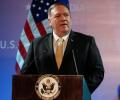
The sanctioned individuals and their immediate family members are prohibited from entering the mainland, Hong Kong and Macao of China. They and companies and institutions associated with them are also restricted from doing business with China, according to the statement by the Chinese foreign ministry.

When a Chinese warship entered Japanese waters, the Indian commander called on China to maintain discipline at sea. Dr Rajaram Panda explains the significance of the Malabar exercises between India, Japan and the US.

'Pakistan is no longer a front-burner issue for America.'
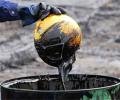
The Indian desire to deepen its ties with Vietnam, especially in the oil sector, besides defence and trade, was conveyed to the top leadership in Hanoi by External Affairs Minister Sushma Swaraj.

China on Thursday said it would not give up its efforts in searching for the missing Malaysia Airlines plane after its satellites spotted three floating pieces of possible debris in the South China Sea between Malaysia and Vietnam.

'India has ramped up infrastructure on its side, so the Chinese military is finding Indian soldiers in locations where they are not used to seeing an Indian footprint,' points out Harsh V Pant.

All 37 sailors on board a cargo ship are missing after the vessel sank late Thursday night after striking a reef on the sea near Dongjia island in east China, official sources said.

The United States and China have agreed to expand military exchanges and exercises as part of efforts to build more stable bilateral ties amid tensions over cyber security.
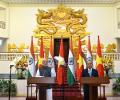
New Delhi is quietly reclaiming its space in Asia by forging alliances with China's neighbours. In a way, India is converting its much-talked about Act East Policy to Engage East practice.

The American efforts to make India a security partner have enhanced India's importance to Chinese decision makers and new recognition of India's importance and achievements are reflected in a much more positive reporting about India in the State-controlled media, says Walter Andersen.
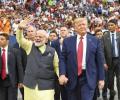
China has been behaving in a belligerent fashion all around its periphery, certainly in the East and South China sea, and its relations with Japan, India as well as others have declined, Bolton said.

'China's latest defence White Paper has been issued against the backdrop of the upgraded Sino-Pakistan strategic relationship which has impinged on India's sovereignty and territorial integrity, and Beijing's continuing intransigence on tackling the issue of the disputed border or intrusion by PLA troops,' says Jayadeva Ranade.
India will not join Japan's efforts to build a strategic counterweight against China along with the United States as it follows an independent foreign policy, the Chinese state media said on Tuesday, ahead of Prime Minister Narendra Modi's maiden visit to the US.

The United States working with its partners and allies is going to hold China accountable to follow the rules, US President Joe Biden has said, as he referred to his recent meeting with leaders from Quad countries involving Australia, India and Japan.

'The crisis has strengthened America's resolve to work towards building its relationship with India as a bulwark against Chinese aggression'

The rupee tumbled 3 per cent against the US dollar in 2024 as concerns over slower economic growth and a stronger greenback in global markets weighed, but it was among the least volatile currencies in the world and the headwinds may be less intense in the coming year.

Had India agreed to join the trade pact, Indian markets would have been flooded with cheap Chinese products.

'There are major implications for India. Though there was a transparently thin attempt to project the troop reduction as intended to promote peace, the downsizing is actually part of plans to streamline and strengthen the PLA, capable of defending China's national interests at home and abroad,' says Jayadev Ranade.
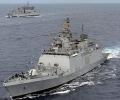
Forging closer military ties against the backdrop of rising Chinese naval power, India and Japan will hold maritime exercise JIMEX in the Bay of Bengal starting Thursday.

Chushul and Depsang are not vital in this game of Chinese checkers, the Indian Ocean Region is. Keeping our maritime prowess restricted has to be a key Chinese strategic interest and it would appear that the LAC affair has helped China achieve its aim, points out Vice Admiral Premvir Das (retd).
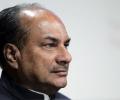
Ways to strengthen military ties and sale of Japanese amphibious aircraft to Indian armed forces are expected to be discussed during the meeting of the Defence Ministers of the two countries in New Delhi in New Delhi.
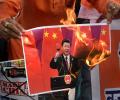
'And this mirror imaging is the most dangerous thing because it leads to tremendous misunderstandings.'

India's decision to skip the meeting came after a year of bilateral discord over China's stubborn opposition to India's entry into the Nuclear Suppliers' Group and a UN ban against Pakistan-based terrorist group Jaish-e-Mohammed leader Masood Azhar.

The 2+2 was attended by Secretary of State Antony Blinken and Secretary of Defence Lloyd Austin and their Indian counterparts S Jaishankar and Rajnath Singh respectively.

Leaders of the United States, India, Australia and Japan did discuss the 'challenge' posed by China during the first meeting of the Quad, and they made clear that none of them have any 'illusions' about Beijing, US National Security Advisor Jake Sullivan has said.

'Unless India ups the ante, Beijing will continue to believe its transgressions are cost free and will feel encouraged to do more of the same.'

The memorandum of understanding on mutual logistics support is the first such major agreement that Vietnam has signed with any country.
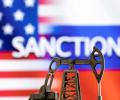
Russian shipments averaged 1.67 million barrels per day in January compared to 1.48 million bpd in December and 1.53 million bpd a year earlier.

China on Saturday began military exercises around Taiwan to test the capabilities of its forces to 'seize control of the sea, air and information', days after a meeting between the United States House Speaker and the President of the self-ruled island in defiance of repeated threats by Beijing.

He warned that Pakistan-supported terrorist groups would continue to carry out attacks inside India.

Access to Sabang Port will allow the Indian Navy to dominate Malacca Strait more effectively, reports Ajai Shukla.

The new government needs to clearly insist on diplomatic reciprocal arrangements with China. While reciprocity is a function of power in bilateral relations, the Modi-led government's responses should be based on India'S inherent strengths, says China expert Srikanth Kondapalli.
